

What to Know About Oil, Coolant, & Brake Fluid for Your Vehicle
A Simple Guide to Your Car’s Essential Fluids
Think of your car’s fluids as its lifeblood. Each one of these essential fluids performs their own critical job, and keeping them clean and at the right level is one of the most fundamental parts of taking good care of your car, truck, or van. Understanding what these fluids do and what to look for when checking them can help you spot any potential issues before they become expensive or inconvenient problems. 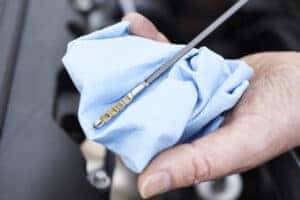
To help you out, here is a simple guide to the three most important fluids that help your car, truck, or van run optimally.
Checking and When to Change Engine Oil
- What it does: Engine oil is the ultimate multitasker. It lubricates the dozens of moving parts inside your engine to prevent wear, helps clean away harmful deposits, and carries heat away from the hottest parts of the engine.
- What to look for: Most cars have a dipstick for checking the oil. The oil on the stick should ideally be a translucent, golden-brown color. If it’s black, gritty, or has a burnt smell, it’s time for an oil change.
- Types: There are a few different types of motor oil to choose from. Conventional oil is the most common and affordable option, often used in older vehicles with simple engines. Synthetic oil is designed to give better protection, especially in extreme hot or cold conditions, and is a great choice for newer or high-performance vehicles. A synthetic blend combines the two, giving you some of the benefits of synthetic oil at a lower cost. Oil is also rated by its viscosity, which is how thick or thin it is. Labels like 5W-30 show how the oil flows in cold weather (the number before the “W”) and at normal driving temperatures (the number after). The right oil helps your engine run smoothly and stay protected.
Checking Coolant (Antifreeze) and When to Flush Your System
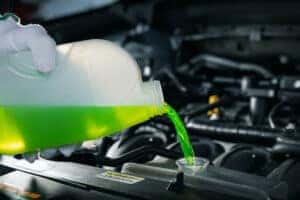
- What it does: Coolant circulates through your engine and radiator to manage temperature. It prevents your engine from overheating in the summer and from freezing in the winter.
- What to look for: You can check the coolant level in the clear plastic overflow reservoir under the hood. The fluid is typically a bright color like green, pink, or orange. If the fluid looks cloudy, rusty, or sludgy, the system is likely corroded and needs to be flushed.
- Types: There are different types of coolants with different chemical make ups and uses. You have Inorganic Acid Technology (IAT), which is green. Organic Acid Technology (OAT), which is orange, pink, or red. Finally, Hybrid Organic Acid Technology (HOAT), which is often yellow or orange.
Checking and When to Change Brake Fluid
- What it does: This is the hydraulic fluid that transfers the force from your foot on the brake pedal to the actual brake pads at the wheels. It operates under high pressure and high temperature.
- What to look for: The brake fluid reservoir is usually a small, clear container. The fluid should be a clear to light amber color. Because brake fluid absorbs moisture over time, it can become dark and contaminated. Dark fluid indicates that the system needs to be flushed and replaced.
- Types: DOT 3 is the most common brake fluid, while DOT 4 is used for ABS systems and high performance cars. Less common is DOT 5 and DOT 5.1, which are used on special vehicle requiring high performance.
The Importance of Professional Automotive Service
Regularly checking these fluids is a great habit, but a professional fluid service is the only way you’ll know that the entire system is flushed and refilled to the proper specification for your vehicle. At our service centers in the Central New York area , our teams of automotive technicians will use the correct type of fluid for your specific make and model of car, truck or van. Let us help you protect your vehicle’s longevity and performance.


0 comment(s) so far on What to Know About Oil, Coolant, & Brake Fluid for Your Vehicle