

All-Season vs. Winter Tires
A Smart Owner’s Guide for New York Drivers
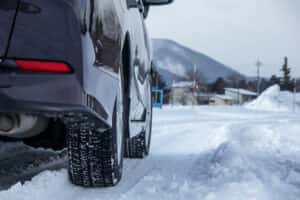
Every November, drivers all over this part of New York state ask the same question: “Do I really need to buy winter tires this year?” To be sure, it’s a significant investment of time and money, and the answer depends entirely on your vehicle, your budget, and your driving routine during the winter months. If you’re wond
ering what to do before the flurries come to town, here’s a list of our pros and cons of All-Season Tires and the typical Winter Tires.
Here is a balanced breakdown to help you choose wisely.
The All-Season Tire: The Jack of All Trades
All-season tires are designed to be a convenient, single-solution tire for a variety of mild conditions.
- Pros: They are a more convenient choice since you never have to change them out when winter ends. They generally have a long tread life and provide good performance in dry and rainy conditions. They can also handle very light, infrequent snow.
- Cons: Like most versatile items, you won’t get anything great if you need a higher level of performance. The all-season tire will see a significant drop in performance when the temperature falls below 45°F. At this temperature the rubber compound of all-seasons hardens and the tread starts to lose its gripping ability. They are not suitable for driving in heavy snow or on ice.
The Winter Tire: A Specialist for the Cold
Winter tires, sometimes called snow tires, are purpose-built for one job: performing safely in cold, snowy, and icy weather.
- Pros: They provide vastly superior grip on snow and ice, resulting in shorter stopping distances and better control. They provide confidence and safety in severe weather conditions.
- Cons: They represent an extra financial investment. They require the inconvenience of changing them twice a year and storing the off-season set. They also wear out faster if driven on warm, dry pavement.
How to Make the Right Choice for You
- All-Season tires may be adequate if: you live in an area that sees very little snow, you have the flexibility to stay home on the worst winter days, and you primarily drive on major, well-plowed roads.
- Winter tires are the smart choice if: you must commute daily regardless of the weather, you live in an area with hills or significant snowfall, or you simply want to prioritize the maximum level of safety for yourself and your passengers.
Get Expert Tire Advice
We’ve been helping folks across the area with their tire needs for decades. At Nimey Auto Group, our teams’ overall goal is to provide you with the right set of tires for your driving needs, giving you the best balance of safety and value. Our team of tire experts can provide their expert advice on the best choice for this winter’s driving needs.
| City/Town | Average Annual Snowfall (Inches) | Proximity Factor |
|---|---|---|
| Boonville | ~220 inches | Known as the “Snow Capital of the East,” the highest totals in the state. |
| Rome | ~102 – 120 inches | High totals due to direct lake-effect from Lake Ontario. |
| Herkimer | ~90 inches | Consistent heavy snow, reinforcing the need for winter compound. |
| Hamilton | ~80 inches | Significant accumulation, placing it well into the “Winter Tire Zone.” |
| Utica | ~88 inches | High regional average, reflecting the challenging city and surrounding conditions. |
| Oneida | ~75 – 110 inches | Variable, but routinely receives heavy lake-effect snow bands. |
| Clinton | ~75 – 90 inches | While slightly lower than the snow belts, still well above the national average. |
Nimey Auto Group Tire Experts Include:

0 comment(s) so far on All-Season vs. Winter Tires